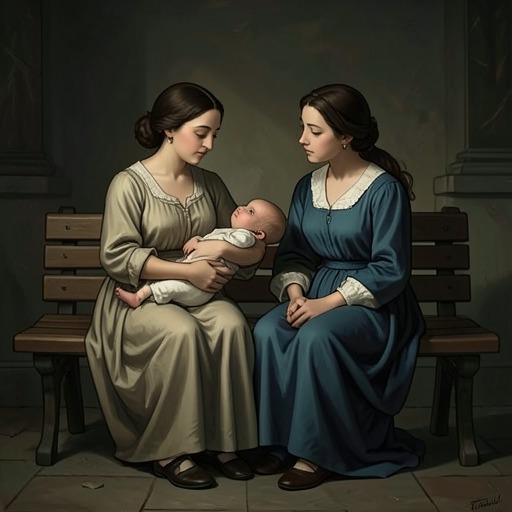
Life magazine cover story about Elizabeth Zott
Lessons in ChemistryLife magazine cover story about Elizabeth Zott turned a successful television scientist into a public image shaped by editorial substitution, hostile testimony, and a misleading use of her daughter’s family tree. The six-page profile placed Elizabeth on the magazine’s cover, but its representation of her intelligence, work, and family diverged sharply from the account Roth had gathered. Its rapid sales made the distortion highly visible; its later institutional consequences also connected the magazine to scrutiny of Hastings.
Publication and Editorial Reframing
The cover appeared two months after Roth’s interview with Elizabeth, in which Roth had found no private story to report. On the cover, Elizabeth stood with folded arms and a grim expression beside the headline Why We’ll Eat Whatever She Dishes Out. The accompanying six-page article included fifteen photographs showing her at work in several settings: on the program, on her rowing erg, in makeup, petting Six-Thirty, meeting with Walter Pine, and adjusting her hair. This range of images made her public life into the article’s visual subject, but it did not ensure that the profile would represent her on her own terms.
The article opened with Roth’s description of Elizabeth as the most intelligent person on television. The editor changed the key word, replacing intelligence with attractiveness. The substitution was small on the page but decisive in meaning: an assessment of intellectual distinction became a judgment about appearance. That editorial change echoed the gendered treatment Elizabeth had encountered in scientific institutions, where her insistence on recognition and refusal to perform expected clerical tasks had drawn complaints even as her work advanced. She was an innovator whose progress was undeniable, yet her standing was repeatedly filtered through judgments about how a woman should behave.
The article did acknowledge the reach of her program. It recounted major episodes, including the fire-extinguisher lesson, the program on poisonous mushrooms, and the broadcast in which Elizabeth said she did not believe in God. Roth’s account characterized the show as offering life lessons. Yet that description sat within a profile whose framing reduced intelligence to attractiveness and whose other quoted sources recast Elizabeth through old prejudices. The contrast made the article’s treatment more than a matter of tone: it presented her work while undermining the authority that gave the work its significance.
Hostile Testimony and the Scientific Record
The profile gave space to Elizabeth’s father, who described her in openly hostile terms. It also quoted Dr. Meyers at the University of California, Los Angeles, presenting Elizabeth as an undistinguished student more concerned with men than scientific study and commenting on her appearance. These claims converted personal denigration into apparent biographical evidence. Rather than explaining Elizabeth through her research or teaching, the article let disparaging assessments stand as a competing account of who she was.
Dr. Donatti’s comments drew on the same pattern of belittlement. Asked about Elizabeth’s employment history, he initially acted not to know who she was, then recalled a dismissive nickname used in the laboratory. He described her as a capable laboratory technician while suggesting that the position was for people without the intelligence to become scientists. He also produced her old lab coat, still marked with her initials. The object preserved a trace of Elizabeth’s work, but Donatti used it to support a story that diminished her intellectual standing. His account was especially compromised by the history behind it: Elizabeth later discovered that an article published under his name had directly taken work from her files, while listing Boryweitz as a co-contributor. She recognized the paper as her own research and confronted Boryweitz, who pleaded that he needed his job. The magazine’s treatment of Elizabeth thus appeared amid an existing struggle over whose work was credited and whose account of the science would be believed.
Elizabeth’s earlier dismissal from Hastings had exposed the same imbalance in explicit terms. Donatti called her pregnancy and unmarried status disgraceful; when Elizabeth asked whether Calvin would have been dismissed for fathering the child, Donatti said he would not. She pointed out that this left no fair basis for firing her. Miss Frask then presented the decision as an enforcement of the institution’s standards. Even routine paperwork elsewhere presumed a husband, requesting his workplace, telephone number, insurance, age, and bank account information. Against that background, the profile’s reliance on old institutional voices did not simply misdescribe an individual. It repeated a system in which women’s scientific work and private circumstances were judged by standards not applied equally to men.
Madeline’s Family Tree and Public Misreading
The most damaging part of the article, in the narrative’s account, was not a laboratory recollection but a reproduction of Madeline’s family tree. Mrs. Mudford’s comments criticized Elizabeth for working outside the home and claimed that her parenting disrupted Madeline’s well-being. The article accompanied those remarks with a copy of the school assignment, across which Mudford had written accusations and an instruction to see her. The assignment thereby moved from a child’s imaginative work into a public argument about Elizabeth’s fitness as a mother.
Madeline had included Walter Pine as a relative. Readers immediately took that entry to mean that Elizabeth was having an affair with her producer, although the tree itself was a fantastical arrangement rather than a conventional family record. It included a grandfather in prison clothes, a grandmother eating tamales in Brazil, a large dog reading Old Yeller, and an acorn designated as a fairy godmother. It also drew a woman named Harriet poisoning her husband, included the dead father’s tombstone, and made hazy connections to Nefertiti, Sojourner Truth, and Amelia Earhart. The page’s playful, expansive kinship gave way in the magazine’s public context to suspicion about Elizabeth’s relationship with Walter. The article’s use of the tree therefore changed its function: a child’s inventive account of family became material for readers to judge the adults around her.
The profile’s claims about motherhood also collided with Elizabeth’s own work on television. When a viewer, Mrs. George Fillis, described herself as only a housewife despite reading medical journals and applying the show’s account of osmosis to a question about leg edema, Elizabeth insisted that no woman was merely a housewife. She asked what else the viewer did, refusing to treat domestic identity as proof of intellectual incapacity. Elizabeth had explained to Roth that she wanted to teach chemistry because understanding atoms and molecules could help women see through limits falsely presented as natural. The magazine’s framing of Elizabeth as a disruptive working mother stood in tension with the program’s effort to recognize women as learners and thinkers.
Circulation and Institutional Consequences
The Life issue sold out in under twenty-four hours. Its commercial success demonstrated the reach of the image it had assembled, but sales alone did not establish that readers accepted every claim in the article. The story does show that the family tree’s presentation invited a damaging inference about Elizabeth and Walter, while hostile remarks from people associated with her past supplied further material for a public portrait she did not control.
The article also became part of a chain leading back to Hastings. Frask wrote to Life, and her letter prompted the Parker Foundation to look more closely at the institute. After the foundation acquired a majority share, its lawyer, Wilson, presented Donatti with a termination notice. The explanation included mismanagement, falsified test results, and plagiarism. Donatti, who had once used institutional status to dismiss Elizabeth’s work, was now being removed from the laboratory’s leadership. When Avery Parker left Elizabeth the possibility of weighing in on Donatti’s employment, Elizabeth declined to endorse him and told him he was not smart enough. The magazine profile did not itself deliver justice for the research Elizabeth had lost, but the publication and Frask’s response helped expose the institution to scrutiny that had concrete consequences for Donatti.
The cover story’s importance lies in the gap between visibility and recognition. It put Elizabeth’s work, public persona, and family before a mass readership, yet changed Roth’s description of her intelligence, gave hostile sources room to diminish her, and made Madeline’s imaginative page vulnerable to adult misinterpretation. The article’s popularity amplified that contradiction. Its place in the later examination of Hastings added another reversal: a magazine that reproduced an unflattering account of Elizabeth also became the venue for the letter that helped direct attention toward the misconduct surrounding her scientific career.